
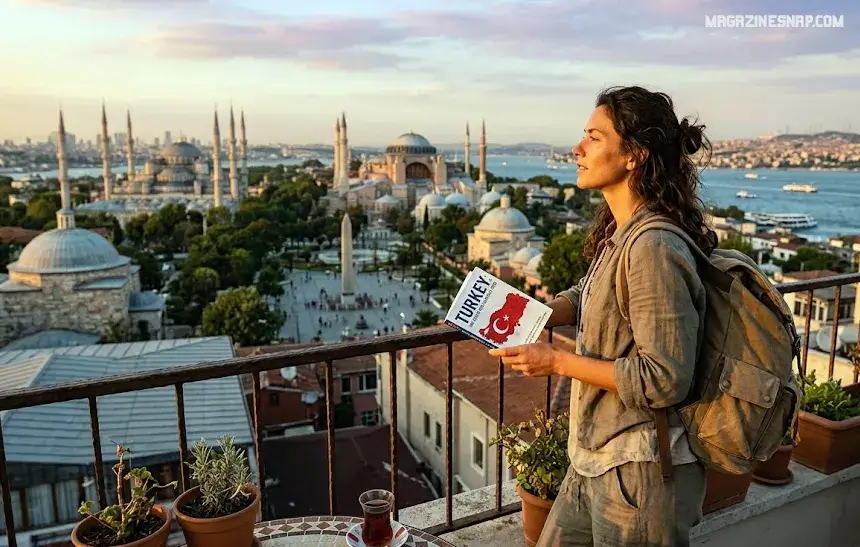
Turkey has a way of making your plans feel small. You book 10 days, assume you’ll cover the highlights, and somewhere around day three you’re rearranging everything because the Aegean coast is too good to rush, or because someone at a tea house just gave you better directions than any app could. The country is bigger than it looks on paper. Not just in square kilometers (though at 783,562, it’s larger than Texas and California combined), but in the sheer density of what it holds.
First-time itineraries usually collapse under that weight. Eight days, five destinations, half the trip on buses or in airport queues, and you leave feeling like you skimmed the surface of something much deeper. This guide covers the best places to visit in Turkey across all major regions, with specific advice on costs, transport, timing, and the things most travel content glosses over.
Why Turkey Keeps Getting More Visitors
Turkey hit 57 million international arrivals in 2023, ranking it 4th globally. That figure held through 2024 and 2025. Part of the growth came from European visitors who discovered that the Lira’s sharp depreciation since 2022 effectively put Turkey in a different affordability bracket from other Mediterranean destinations.
But the numbers alone don’t tell you why people keep coming back. Turkey has sat at the geographic center of five major civilizations, and you feel that wherever you go. Roman amphitheaters here are better preserved than most in Italy. Byzantine churches were converted to mosques and then back again. Ottoman architecture, specifically the mosques, hammams, hans, and covered bazaars, is woven into the fabric of everyday urban life rather than cordoned off as a historical exhibit.
What’s striking, compared to similar destinations in southern Europe, is how lived-in Turkey still feels outside the resort zones. The food is deeply regional, the coastline stretches 8,300 km, and the country doesn’t perform itself for tourists the way some of its neighbors do.
Best Places to Visit in Turkey
Istanbul: 4 to 5 Days, Not a Quick Stop
Sixteen million people live in Istanbul, spread across two continents. That geographical fact explains something about the city’s energy; it always seems to be moving in more than one direction at once.
Start in Sultanahmet. The Hagia Sophia alone justifies a full morning: 1,500 years old, converted from church to mosque to museum and back to mosque, and still genuinely overwhelming when you walk inside. The Blue Mosque sits directly across the square. Topkapi Palace is a 10-minute walk. Many travelers spend two full days in this single neighborhood without exhausting it.
That said, Istanbul’s most memorable version rarely happens inside those landmarks. The public Bosphorus ferry (roughly 30 Turkish Lira in early 2026, about $0.90 USD) covers both the European and Asian shores in 90 minutes for almost nothing. Kadıköy, on the Asian side, has the city’s best produce market and almost no tourists. The streets behind Istiklal Avenue in Beyoğlu are where Istanbul actually eats and drinks, not the avenue itself.
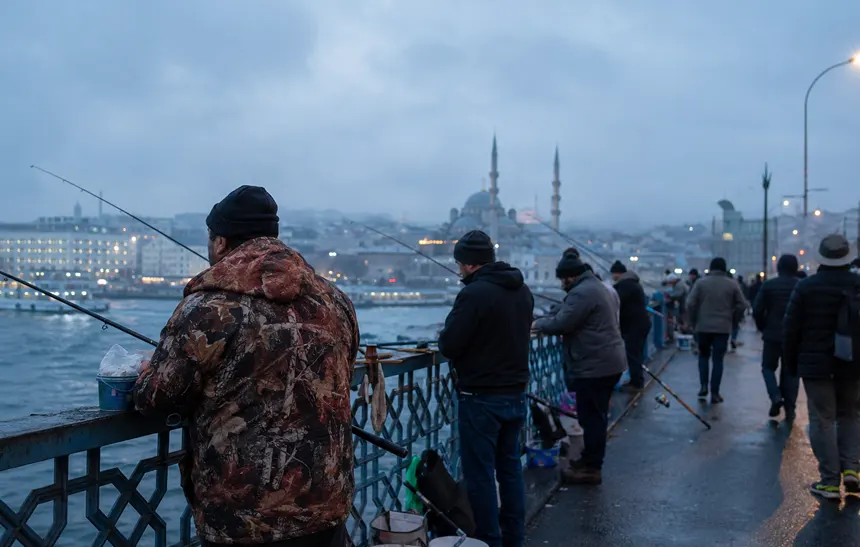
The moments people talk about most tend to be smaller: watching fishermen line the Galata Bridge an hour before dawn, wandering Balat before the Instagram crowd arrives, sitting in an old meyhane for three hours over raki and cold small plates. I’ve noticed that travelers who over-schedule Istanbul consistently enjoy it less than those who leave gaps. The city is physically demanding in a way that catches people off guard; hilly, crowded, and emotionally intense. Build in slower afternoons deliberately.
Practical Istanbul notes:
- Sultanahmet suits first-timers and anyone focused on historical access. Karaköy and Beyoğlu have better restaurants and a younger atmosphere. Kadıköy offers a local feel that the European side rarely matches.
- The Istanbulkart transport card covers trams, ferries, and metro lines. Ferries here are genuinely part of the city experience, not just a way to cross water.
- Most historic mosques are free to enter. The Hagia Sophia is free. Topkapi Palace runs around $25 USD and earns it.
- The Grand Bazaar has 4,000 shops. Go once for the experience, skip the expectation of good prices, and don’t let carpet sellers steer you into a prolonged tea invitation you didn’t ask for.
Cappadocia: More Interesting Than the Photos Suggest
Here’s the thing about Cappadocia that surprises most people: the photos are accurate. It really does look like that. Thousands of volcanic tuff formations called fairy chimneys rising from the valleys, cave churches carved into cliff faces, underground cities dug eight levels deep by early Christian communities hiding from Roman persecution. The landscape around Göreme has no real equivalent anywhere in Europe or the Middle East.
The common mistake is spending the whole trip inside Göreme itself, which is tourist-heavy and somewhat overrun with sunrise balloon-watching spots. The better experiences are usually a short drive away.
Ihlara Valley is 14 km of canyon threaded with Byzantine churches cut into the walls, and on weekday mornings it’s nearly empty. Derinkuyu Underground City descends 85 meters and once sheltered around 20,000 people; it’s one of the genuinely disorienting places I’ve visited anywhere. Uçhisar sits on higher ground with cleaner views. Çavuşin has more local character and fewer tour groups.
Balloon flights run $150–250 USD depending on the season and operator. Royal Balloon and Butterfly Balloons consistently come up in safety discussions; worth specifying when you book. Plan 2–3 months ahead for April through June and September through October, since good operators fill fast. Cancellations due to wind are frequent in winter; roughly 30–40% of flights don’t launch between November and February.
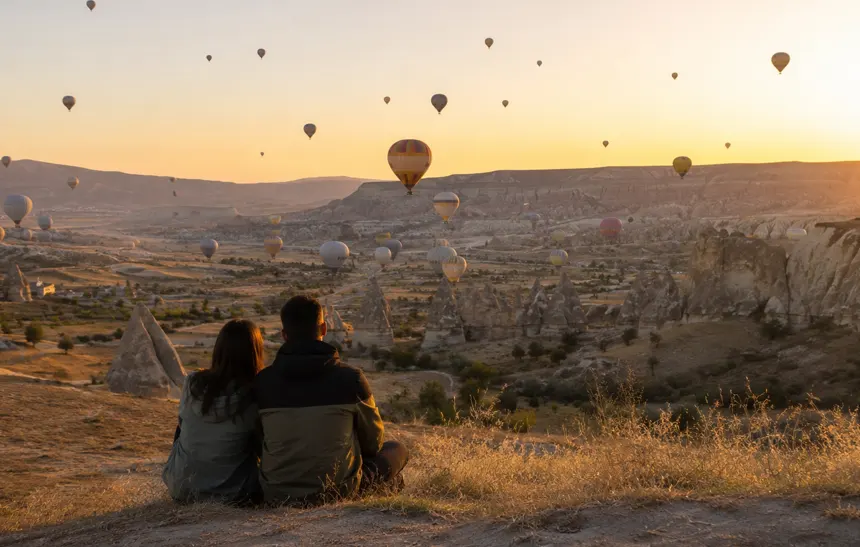
One thing worth saying plainly: you don’t have to go up in a balloon to get something out of Cappadocia. Watching a few hundred balloons lift over the valleys at first light from the ground is already worth the early alarm.
Cave hotels vary more than the marketing suggests. Some are genuine restored stone dwellings with underfloor heating and well-designed bathrooms. Others are basic rooms with cave-adjacent branding. Check heating reviews for winter stays specifically, bathroom ventilation, and whether “valley views” means an actual view or a courtyard. Kelebek Heritage House in Göreme and Yunak Evleri in Ürgüp have held up well through 2025–2026 reviews.
Ephesus and the Aegean Coast
Ephesus is Turkey’s most visited archaeological site, and the label “Turkey’s Roman city” undersells it considerably. The Library of Celsus was completed in 117 AD as a memorial to a Roman senator. The Great Theatre seated 25,000 people. Walking the marble-paved Curetes Street gives you a concrete sense of how a major ancient city actually functioned at scale, which is rarer than it sounds at archaeological sites.
Arrive before 9 AM in summer. By 10:30, cruise tour groups have filled the main routes and the atmosphere changes completely.
Enter through the upper gate rather than the lower one. Nearly every tour bus unloads at the lower entrance, so starting from the top puts you moving in the same direction as the crowd. You reach the Library of Celsus as the main draw at the end, when it’s less packed than it would be if you’d started there.
Stay in Selçuk rather than the hotels near the site itself. It’s 3 km away, has better food options, a Thursday market that functions primarily for locals, and easy access to the House of the Virgin Mary. The Terrace Houses inside Ephesus charge extra but justify it; they show how wealthy Roman residents actually lived, with surviving mosaics, wall frescoes, heating systems, and intact domestic layouts.
South along the Aegean, the coast moves through Kuşadası, Bodrum, and Marmaris. Bodrum tends to divide visitors. The Castle of St. Peter houses the Museum of Underwater Archaeology, one of the best specialist museums in the country. The waterfront after dark, on the other hand, is loud and relentless. May and October are noticeably better for anyone coming for the archaeology.
Pamukkale: Stay Overnight, Not as a Day Trip
Pamukkale is one of the few places that actually looks better in person than in edited photos (an unusual claim, but accurate). The calcium carbonate terraces are white, warm underfoot, and reflect changing light in a way that flat images don’t capture. Shoes aren’t allowed on the travertines; bring ones that slip on and off easily.
Midday in July or August is the worst possible time to visit: crowded, glaring, and difficult for any kind of photography. Sunrise and late afternoon are genuinely different experiences. Staying overnight in the village gives you both windows before the day-trip buses from Denizli arrive at 10 AM. Several small guesthouses directly at the site charge $30–60 per night.
The ruins of Hierapolis cover the hillside above the terraces. Its necropolis is among the largest in Turkey, with over 1,200 tombs spread across the plateau. The antique pool, where you swim among submerged Roman columns in warm thermal water, costs around $20 USD. Worth doing once.
Fair warning: the terraces themselves are smaller than their social media presence implies. That’s not a reason to skip them; the combination of thermal water, white mineral formations, Hierapolis above, and open valley views is still genuinely worthwhile.
Antalya and the Turquoise Coast
Kaleiçi, Antalya’s old quarter, is one of the surprises on the coast. It largely survived the resort development that consumed the surrounding coastline, and Hadrian’s Gate (built 130 AD for the emperor’s actual visit to the city) still stands at its entrance. The Roman harbor below is now a marina, which strips it of most historical atmosphere but produces a functional dinner setting.
Further west, the coastline around Kaş, Kalkan, Çıralı, and Fethiye is where many travelers end up extending their trips without planning to. These areas layer ancient ruins, hiking access, boat trips, and slower coastal pace onto each other in a way that doesn’t feel as developed as comparable stretches of southern Europe.
Kaş specifically is worth more attention than it typically gets in travel roundups. It’s walkable, genuinely calm outside July and August, and serves as a solid base for Kekova’s submerged Lycian ruins, Patara Beach (one of the longest in Turkey at 18 km), nearby rock tombs, and mountain villages within 30 minutes. Strong diving infrastructure if that matters to you.
Even if hiking isn’t your thing, consider walking a short section of the Lycian Way. The full route is 540 km, but a 1–2 day stretch near Kaş gives you cliff paths, pine forest, quieter coves, and Lycian ruins without committing to a trek. The sea from the high sections is a shade of blue that photographs consistently fail to get right.
For timing: May and October are the best months. June through August works for swimming but expect heat and full accommodation. September hits the sweet spot of warm water, thinning crowds, and August prices coming down.
Trabzon and the Black Sea: Turkey’s Other Side
Most international visitors skip the Black Sea coast entirely, which is understandable given how differently it presents itself. The landscape here looks nothing like the Mediterranean photographs that dominate Turkey’s travel imagery: green, forested, steep, frequently foggy, and wet. The Pontic Alps run close to the coast and the climate is genuinely closer to northern Georgia (the country) than to Antalya.
Trabzon has the Hagia Sophia of Trabzon (an entirely separate 13th-century Byzantine church, not to be confused with the Istanbul one), a decent covered market, and what I’d argue are the best anchovy preparations in the country. The Black Sea hamsi season runs November through February; if your trip falls in that window, order them in every form available.
Sumela Monastery sits 50 km south of Trabzon, built into a vertical cliff at 1,200 meters above sea level. It was founded in the 4th century AD and occupied continuously until the Greek Orthodox community was expelled during the 1923 population exchange between Greece and Turkey. The interior frescoes are partially damaged but still vivid. Fog, counterintuitively, makes the setting more impressive. Weekday visits are quieter.
Mardin: The Edge of Mesopotamia
Mardin sits above the Mesopotamian plain in southeastern Turkey, and on clear days the view extends 60 km into Syria. It’s been continuously inhabited since at least the 2nd century BC, and you feel that age in the stone. The architecture is honey-colored limestone; the hillside turns a particular shade of amber at dusk that doesn’t look quite real.
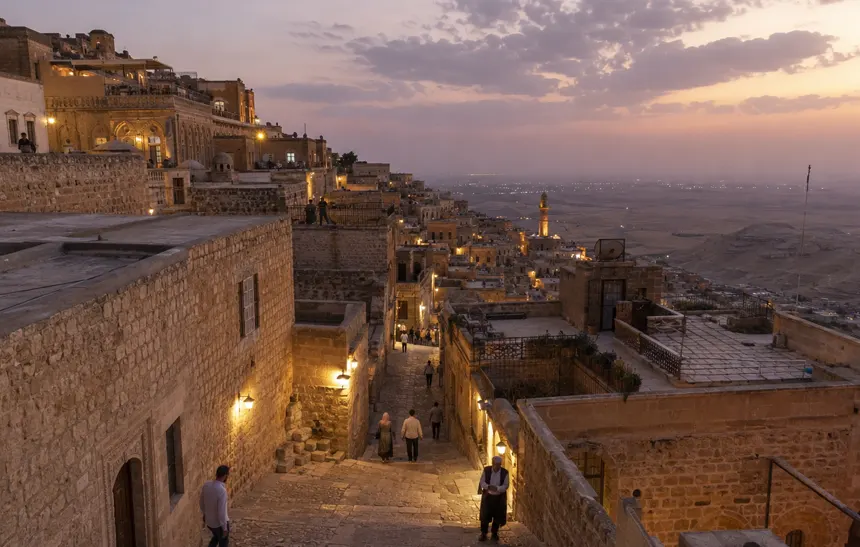
What makes Mardin genuinely unusual is the religious coexistence. Mosques, Syriac Christian churches, and a Jewish quarter exist within a few hundred meters of each other. The Deyrulzafaran Monastery, 5 km outside the city, has functioned as a Syriac Orthodox patriarchate since the 5th century. Services are still conducted in Aramaic. That’s not a museum exhibit; it’s active liturgical practice in the oldest continuously spoken Semitic language.
Arabic, Kurdish, Turkish, Assyrian, and Syriac cultural influences layer over each other in ways you don’t find elsewhere in Turkey. The food reflects it: heavier spice use, richer lamb dishes, exceptional desserts, and a coffee culture that runs stronger and more bitter than Turkish coffee elsewhere.
Mardin pairs naturally with Diyarbakır, 95 km northwest, a city surrounded by 4th-century basalt walls that are a UNESCO World Heritage Site. Göbeklitepe, the 12,000-year-old ritual site that forced historians to reconsider the timeline of organized religion, is now about a 2-hour drive. Check current travel advisories for anything east of Mardin toward the Syrian border; Mardin and Gaziantep themselves are safe for tourists as of 2026.
Ankara: Not Just the Capital
Ankara gets skipped almost universally by international travelers, and the city doesn’t help itself much. But the Museum of Anatolian Civilizations is a serious reason to stop. Housed in a restored 15th-century bedesten (covered market building), it traces human settlement in Anatolia from the Neolithic period through Chalcolithic, Hittite, Phrygian, and Urartian eras. The Hittite artifacts are particularly significant; the Hittites were one of the dominant powers in the ancient Near East and had a peace treaty with Egypt in 1259 BC that is one of the oldest known international agreements. You won’t find a collection like this anywhere else. Entry is around $8 USD; give it 3 hours minimum.
Ankara is also the departure point for the high-speed rail to Istanbul (4 hours, $20–30 USD in second class) and the Doğu Express to Kars, which is a 24-hour journey through central Anatolia that functions as one of Turkey’s better slow-travel experiences.
Things to Do Across Turkey
The Doğu Express deserves specific mention. The overnight train from Ankara to Kars crosses mountain tunnels and open steppe in a journey that takes just over 24 hours. Book a sleeper berth through the TCDD website (Turkey’s national rail operator). December through February seats go fast. This is worth planning around rather than booking as an afterthought.
Go to a hammam, but not on your last day. Your first hammam is disorienting: you’re undressed, horizontal, being scrubbed by a stranger, and the ceiling is domed and steamy. It takes a session to understand it. The Çemberlitaş Hammam in Istanbul dates to 1584; a full treatment with steam, kese scrub, and oil massage runs $60–80 USD. Neighborhood hammams outside tourist areas charge $15–20 and are functionally identical.
If your route comes anywhere near Gaziantep, plan at least two days there. It holds UNESCO Creative City of Gastronomy status, and the designation is accurate. The baklava uses pistachios grown within 30 km of the bakeries. The kebab tradition, built around lamb and regional spice mixes, is meaningfully different from Istanbul’s. The city’s Gastronomy Museum, opened in 2015, runs about 2 hours and is better than the admission price suggests.
Consider timing a visit during Ramadan iftar if the calendar allows. At sunset, streets near mosques in Sultanahmet and smaller Anatolian cities fill with shared tables. Mosques provide free food for anyone present. It’s one of those travel moments that’s genuinely hard to describe without overstating it.
Getting to Turkey and Around It
Istanbul Airport (IST) handles the bulk of international arrivals, with direct connections from most major European cities and one-stop routes from North America via Amsterdam, London, or Frankfurt. Turkish Airlines serves 120+ countries. Sabiha Gökçen Airport (SAW) on the Asian side handles budget carriers and costs 45–90 minutes to the city center depending on traffic.
Domestic flights are the most overlooked part of Turkey trip planning. A Turkish Airlines or Pegasus flight from Istanbul to Cappadocia (Nevşehir or Kayseri airports) costs $30–70 USD booked 2–4 weeks out. Istanbul to Trabzon, Van, or Gaziantep runs $50–100 USD. Flying saves entire days compared to bus routes across mountain terrain.
Long-distance buses work well for routes under 8 hours, once you factor in airport processing time on both ends. Metro Turizm, Pamukkale Turizm, and Kamil Koç are the reliable operators; Istanbul to Ankara costs about $12–18 USD and includes tea service. On the rail side, the Istanbul to Ankara high-speed line (4 hours, $20–30 USD) is consistently underused by tourists and consistently good. The Izmir to Selçuk commuter rail takes 1 hour and costs around $2 USD; it’s one of the most useful cheap train rides in the region.
Renting a car makes sense for Cappadocia, the Black Sea coast, and the Lycian Way. In Istanbul, parking and traffic make it more trouble than it’s worth. An international driving license is required.
What Things Cost in Turkey in 2026
Turkey remains strong value relative to western Europe, though the gap has narrowed since 2022–2023 as the Lira partially stabilized and tourist-area prices adjusted upward. Cappadocia, Bodrum, and the coast in July and August run noticeably higher than the averages below.
| Category | Budget / Day | Mid-Range / Day |
|---|---|---|
| Accommodation | $20–40 (hostel/guesthouse) | $70–140 (hotel) |
| Food | $12–22 | $35–60 |
| Transport | $5–15 | $20–40 |
| Activities | $5–20 | $30–80 |
| Daily Total | ~$42–97 | ~$155–320 |
Specific costs worth noting:
- Bosphorus public ferry (full route): ~30 TL (~$0.90 USD)
- Ephesus entry: ~$25 USD
- Cappadocia balloon flight: $150–250 USD
- Çemberlitaş Hammam full treatment: $60–80 USD
- Lokanta lunch (a Turkish canteen): $4–7 USD
- Museum Pass Turkey (covers 250+ sites): ~$55 USD; pays for itself within 3–4 major sites
- Istanbul to Cappadocia domestic flight: $35–70 USD booked ahead
- Istanbul to Ankara high-speed rail: $20–30 USD (2nd class)
Practical Advice Worth Following
Carry cash. Cards work in major cities and tourist zones, but village restaurants, local bus stations, market stalls, and smaller guesthouses still run predominantly on cash. Garanti and İşbank ATMs are the most reliable; withdraw larger amounts to reduce per-transaction fees.
Get a local SIM at the airport on arrival. Turkcell and Vodafone Turkey both sell tourist packages at Istanbul Airport; a 30-day, 20 GB plan costs $15–20 USD. Roaming costs significantly more and often performs worse.
Learn six words of Turkish before you land. Merhaba (hello), teşekkürler (thank you), lütfen (please), evet (yes), hayır (no), kaç para (how much). It’s a small effort that changes the quality of nearly every interaction, particularly in markets, local restaurants, and when asking directions outside tourist areas.
Structure your itinerary by region rather than by a list of sites. Istanbul to Trabzon is a 20-hour drive. Istanbul to Mardin is 22 hours. Pick two connected regions per trip and go further into each one, rather than covering the country at speed.
Book Cappadocia cave hotels 3–4 months ahead for spring and fall. The well-reviewed properties (Kelebek in Göreme, Yunak Evleri in Ürgüp, Argos in Cappadocia at the higher end) sell out early and don’t discount last-minute during peak season.
Suggested Itineraries by Length
7 to 10 days (first trip): Istanbul for 3 days, fly to Cappadocia for 2–3 days, then Ephesus via Izmir for 2 days. This sequence covers Byzantine history, ancient Rome, underground cities, and the balloon experience without forcing a punishing pace.
2 weeks (second trip or if you have more time): Istanbul for 2 days, then Izmir and the Aegean coast including Ephesus for 3 days, Antalya and the Turquoise Coast for 4 days, Cappadocia for 3 days. Domestic flights between legs are worth it here.
3 weeks or more (regional depth): Add Gaziantep for 2 days, Mardin for 2 days, and if the schedule allows, Trabzon and the Black Sea for 3 days. This eastern extension requires a domestic flight from the southeast back to Istanbul at the end.
FAQs About Places to Visit in Turkey
Is Turkey safe for tourists in 2026?
For the main tourism regions, yes. Istanbul, the Aegean and Mediterranean coasts, Cappadocia, Ankara, and the Black Sea are all well-traveled and broadly safe. Normal urban precautions apply in Istanbul: pickpocketing happens in crowded tourist zones, and vendors around the Grand Bazaar can be persistent. The border area near Syria is a separate matter; check your government’s current advisory before planning anything east of Gaziantep toward the border. Gaziantep city itself is fine.
How many days do you actually need?
Ten days covers Istanbul plus one other region done properly. Two weeks gets you Istanbul plus two regions. The sweet spot for a first trip is 12 to 16 days; that usually allows Istanbul, Cappadocia, and one coastal stretch without turning the trip into a transit exercise. Three weeks opens the Black Sea or the southeast.
Do you need a visa for Turkey?
Depends on your passport. US, UK, Canadian, and most EU citizens apply for an e-Visa before arrival through evisa.gov.tr, currently $50 USD for US passport holders and taking roughly 10 minutes. Several nationalities including Japan get visa-free entry. Check the portal directly before booking flights; the list updates periodically.
What’s the best first trip to Turkey?
Istanbul for 3 days, fly to Cappadocia for 2–3 days, then either return through Istanbul or add Ephesus via Izmir for 2 more days. That’s 7–8 days total and covers enough historical range, geography, and food variety to give you an accurate sense of the country. It’s a common combination because it holds up well in practice.
Can you drink alcohol in Turkey?
Yes. Turkey is a secular republic; alcohol is available in restaurants, bars, and shops throughout the country. Raki, an anise-flavored spirit at 45% ABV, is the traditional accompaniment to mezes: cold small plates of white cheese, melon, herbs, and seafood. Some municipalities restrict sales during specific religious holidays, but this is the exception. Worth noting: alcohol taxes have risen significantly since 2021, so the cost relative to food has shifted upward.
What do most visitors miss?
The regional food differences are the most underexplored part of visiting Turkey. Arriving in Istanbul and eating Ottoman-style Turkish food for the whole trip gives you an accurate picture of one tradition out of several. Gaziantep’s pistachio baklava and lamb kebab are categorically different from Istanbul versions. The Black Sea’s anchovy preparations and corn bread exist in their own culinary tradition. Van’s breakfast culture involves 20 or more dishes served simultaneously. Following the food geographically is a legitimate way to build an itinerary, and one that most visitors don’t consider.
The Honest Part
Summer on the coast is popular for a reason, but July and August in Antalya and Bodrum are genuinely hot and crowded in ways that affect how much you enjoy being there. Spring and fall are better for almost everything except swimming temperatures. Winter in Cappadocia produces snow on the fairy chimneys, noticeably fewer visitors, and a 30–40% balloon cancellation rate due to wind.
Turkey rewards slowing down. The experiences that tend to stay with people aren’t the landmark moments; they’re the gaps between them. Tea at a bus station at midnight. The call to prayer carrying across a coastal town at sunset. A lokanta lunch where the menu is handwritten and nobody speaks English and the food is the best thing you’ve eaten all week. An invitation into a shop for conversation you hadn’t planned on.
Istanbul feels restless and imperial at the same time. The Aegean coast slows your pace down whether you intend it to or not. Central Anatolia feels genuinely ancient in a way that European cities, even very old ones, rarely do. The southeast connects to a historical world that most Western travelers haven’t encountered before.
The longer you stay, the less Turkey feels like a destination you’re visiting. That shift usually happens around the second week. And that, typically, is when people start planning how to come back.