
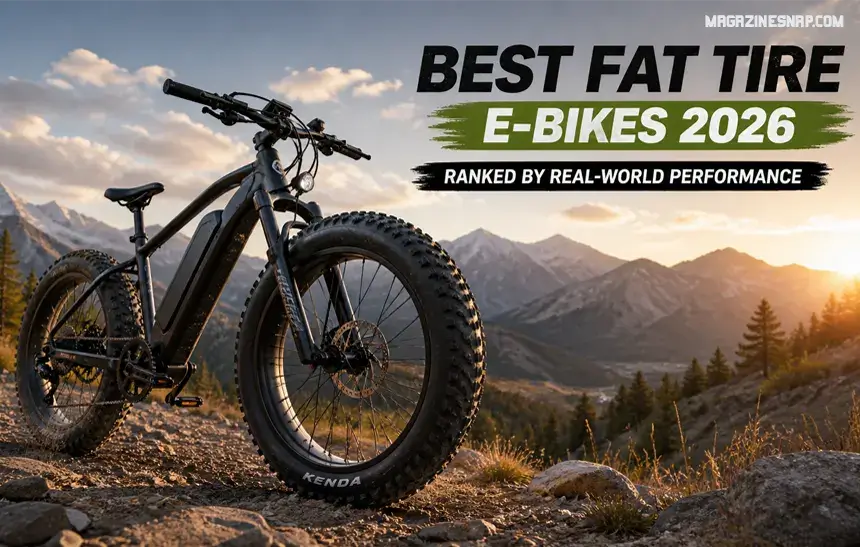
The fat tire e-bike market in 2026 is genuinely crowded. You’ll find a dozen bikes on Amazon that look identical on spec sheets, cost $800, and start falling apart six months in. At the same time, some of the best options sit under $1,500 and come from brands that have been iterating seriously since 2021.
I looked at 12 bikes across five categories: overall performance, value, heavy-rider capacity, steep terrain, and long range. Some surprised me. A few that showed up in top-10 lists across the web didn’t survive closer scrutiny. The 5 picks below are the ones I’d actually put money on.
What Actually Matters When Buying a Fat Tire E-Bike
Three things separate good fat tire e-bikes from forgettable ones in 2026.
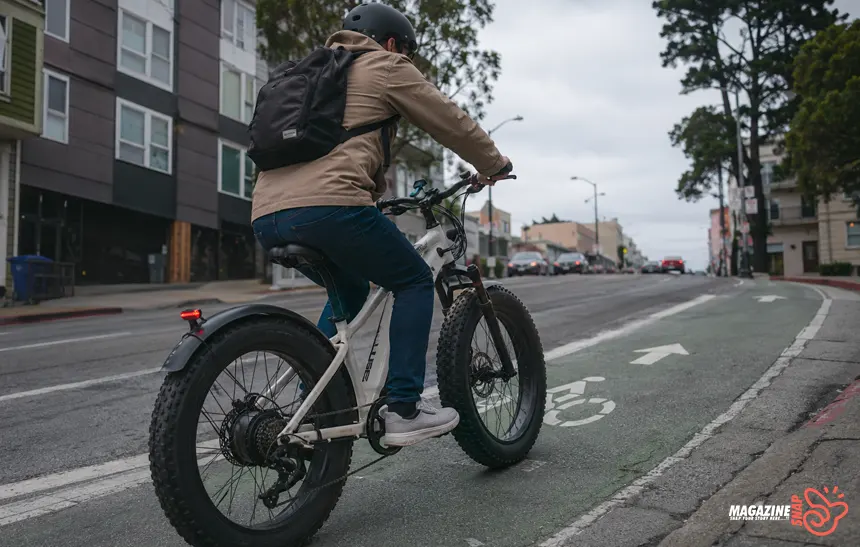
Torque sensors. A cadence sensor detects that your pedals are moving and kicks in power. A torque sensor measures how hard you’re pushing and responds proportionally. The difference on a hill isn’t subtle; it’s the difference between a bike that feels alive and one that feels like it’s making decisions for you. Any mid-range fat tire e-bike worth recommending now ships with one.
UL 2849 certification. Battery fires made national news between 2022 and 2024, mostly in cities where delivery workers were charging cheap lithium packs in small apartments. UL 2849 means an independent lab tested the full electrical system, not just the cell chemistry. What’s striking here is how many bikes in the $700-$900 range still don’t carry it in 2026. Check before you buy.
Honest range expectations. Every manufacturer’s range figure comes from ideal conditions: a 150-lb rider, flat terrain, mild temperature, mid-level assist. Real-world range runs 70-75% of that. On a cold morning below 40°F, shave off another 10-15%. A bike advertised at 65 miles realistically gives you 40-50 in mixed conditions. Plan around that number, not the one on the product page.
Best Fat Tire E-Bikes 2026: The Top Picks
Aventon Aventure 3: Best Overall Fat Tire E-Bike
Price: $1,999 | Motor: 750W rear hub (1,188W peak) | Battery: 48V 15Ah (720Wh) | Range: 36-60 miles | Tire width: 4.0 inches
The Aventure 3 ships as Class 2 (20 mph max) but unlocks to Class 3 (28 mph) through the Aventon app. That flexibility matters more than it sounds, because local e-bike regulations are still a patchwork across US cities and counties. You want the option, even if you never use it.
The torque sensor is the main reason it rides better than bikes at similar price points. Climbs don’t have that lurching on/off feeling you get with cadence-only systems. The ACU (Aventon Control Unit) adds 4G GPS tracking and remote locking, which is increasingly relevant as e-bike theft rates in major metros climbed 35% between 2022 and 2024 according to NYPD and LAPD property crime data. Over-the-air firmware updates mean the bike you buy in June can have improved performance by September.
One real gripe: the kickstand is annoying to deploy when the rear rack is loaded. Small issue, but you’ll notice it daily. (I’ve heard this complaint from enough Aventure 3 owners that it clearly wasn’t a fluke unit.)
If you’re buying one fat tire e-bike and you don’t have a specific edge case (steep hills, extreme loads, maximum range), this is the one to get.
Lectric XP 4: Best Fat Tire E-Bike Under $1,000
Price: $999 base / ~$1,200 with 750W motor upgrade | Motor: 500W rear hub (upgradeable) | Range: 40-55 miles | Weight: ~70 lbs
At $999, the XP 4 shouldn’t be this capable. Lectric doubled the rear rack capacity to 150 lbs over the previous model, so it handles real cargo, including a passenger with the optional add-on seat. That’s a specification you’d expect on a $1,400 cargo-adjacent bike, not a folder at this price.
The gear ratio improvement over the XP 3.0 is noticeable at speed. Earlier versions felt strained past 18 mph on flat ground; the XP 4 doesn’t. Pedaling efficiency at higher speeds is meaningfully better.
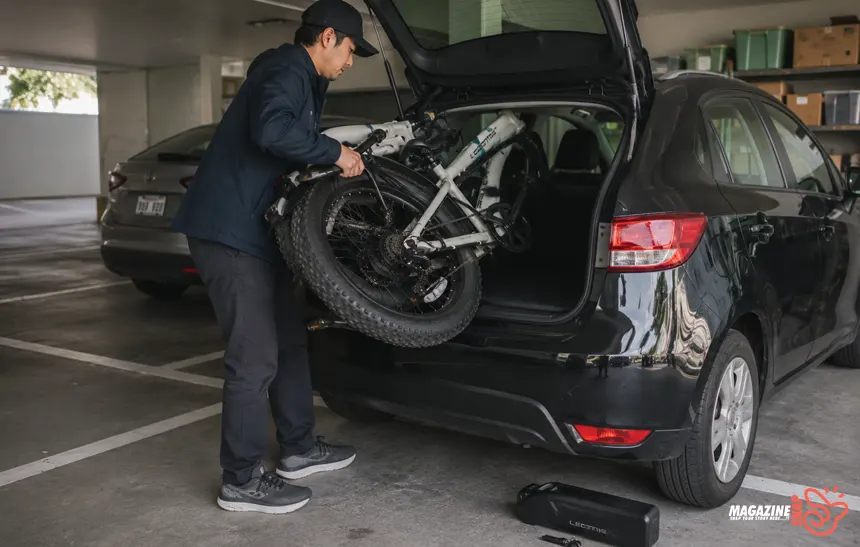
The weight is the honest problem. Nearly 70 lbs is heavy for a folding bike, and anyone who tells you otherwise hasn’t carried one up a flight of stairs. Remove the battery before any lifting (10 seconds, simple latch) and accept it won’t be a one-handed carry. For apartment storage and car-trunk transport, it still makes practical sense. Just go in with clear expectations.

Velotric Nomad 2X: Best for Heavy Riders and Big Loads
Price: ~$2,299 | Motor: 750W hub (1,400W peak), 105Nm torque | Payload capacity: 560 lbs | Suspension: 120mm air fork, 80mm rear shock
The 560 lb payload is the headline spec, and it genuinely holds up. Most fat tire e-bikes cap at 300-350 lbs total (rider plus cargo combined). I’ve noticed that brands often bury this figure in footnotes, so it’s worth calculating your actual number: your body weight plus your typical gear load, before you assume any bike fits your situation.
The 1,000-lb tow rating deserves more attention than it gets. If you’re hauling a camping trailer, a gear cart, or even a small livestock transport on rough terrain, that capacity is real utility. It’s not marketing language.
Velotric’s “Sensor Swap” feature lets you toggle between torque and cadence sensor modes. This is smarter than it sounds. Torque mode gives you responsive, proportional assist on variable terrain. Cadence mode delivers consistent power on flat roads where efficiency beats feel. Most bikes make you pick one approach at purchase and live with it.
The camouflage paint option comes with a quieter motor mode Velotric built specifically for hunters accessing trailheads. The contrarian take: this specificity is actually a trust signal. Brands that build for narrow use cases usually understand their riders better than brands optimizing for broad appeal.
Aventon Aventure M: Best Fat Tire E-Bike for Steep Hills
Price: $2,899 | Motor: A100 mid-drive, 750W, 100Nm | Battery: 48V 15Ah | Range: Up to 60 miles
Mid-drive motors work through the bike’s drivetrain rather than directly spinning the wheel. On grades above 10%, that distinction produces a measurable difference in sustained torque delivery and overall efficiency. At equivalent wattage, a mid-drive outperforms a hub motor on extended climbs because it can use lower gears to maintain cadence without bogging down.
What’s striking about the Aventure M specifically is how well Aventon tuned the power delivery. There’s no lag between pedal input and motor response. Riding it feels close to a high-end non-electric trail bike with an invisible assist, which sounds like marketing copy but is the most accurate description I have.
The battery cross-compatibility with other Aventon models is a minor convenience, not a selling point. But if two people in a household own Aventon bikes, one charger and one spare battery covering both is a genuinely useful configuration.
The price is hard to defend unless hills are your daily reality. If you’re climbing sustained grades regularly (mountain roads, not city inclines), the Aventure M is purpose-built for that problem. If you’re not, you’re paying for capability that stays dormant.
Himiway Cruiser: Best Fat Tire E-Bike for Long Range
Price: ~$1,599 | Motor: 750W rear hub | Battery: 48V 20Ah (960Wh) | Range: 50-70 miles
The 960Wh battery is the largest in this price bracket by a meaningful margin. For context, the Aventon Aventure 3 runs a 720Wh pack; the Cruiser carries 33% more capacity for $400 less. If you’re commuting 20-25 miles each way without reliable charging at the destination, this gap matters a lot.
The ride feel is less refined than the Aventure 3, and that’s a direct consequence of the cadence sensor. Assist kicks in at a set level rather than responding to effort, which produces that slight mechanical feeling on variable terrain. For relaxed, flat-path riding, it’s a non-issue. For anything more technical, you’ll notice the difference within the first few miles.
Where the Cruiser earns its place is predictability over distance. You set your assist level and get consistent output, without the motor constantly recalibrating to your pedal pressure. (Some riders actually prefer this, especially older riders or those coming from traditional e-bikes rather than performance cycling backgrounds.) For covering ground without obsessing over the motor, it works well.
Side-by-Side Comparison
| Bike | Price | Motor | Torque Sensor | Real-World Range | Payload | Best For |
|---|---|---|---|---|---|---|
| Aventon Aventure 3 | $1,999 | 750W hub | Yes | 36-60 mi | 350 lbs | Most riders |
| Lectric XP 4 | $999 | 500W hub | No | 40-55 mi | 330 lbs | Budget + folding |
| Velotric Nomad 2X | ~$2,299 | 750W hub | Yes (switchable) | 40-60 mi | 560 lbs | Heavy riders/loads |
| Aventon Aventure M | $2,899 | 750W mid-drive | Yes | Up to 60 mi | 350 lbs | Steep terrain |
| Himiway Cruiser | ~$1,599 | 750W hub | No | 50-70 mi | 350 lbs | Long-distance |
(Payload figures include rider plus gear combined. Verify your specific configuration against manufacturer specs.)

Hub Motor vs. Mid-Drive: The Short Version
Hub motors dominate this list because they work for most people. They’re cheaper, lower maintenance, and perform well on anything under a 10% grade.
Mid-drive motors work through the gears, so they handle steep and variable terrain better at equivalent wattage. The tradeoff is cost and drivetrain wear; your chain and cassette absorb more stress over time.
Here’s the contrarian take most roundups skip: for the majority of US riders, mid-drive is overkill. The terrain people describe as “hilly” usually means 4-6% grades. Hub motors handle that without complaint. If you’re genuinely on sustained 10%+ climbs several times a week, mid-drive earns its premium. Otherwise, save the $900 and spend it on a quality helmet and lights.
Three Things Worth Knowing Before You Buy
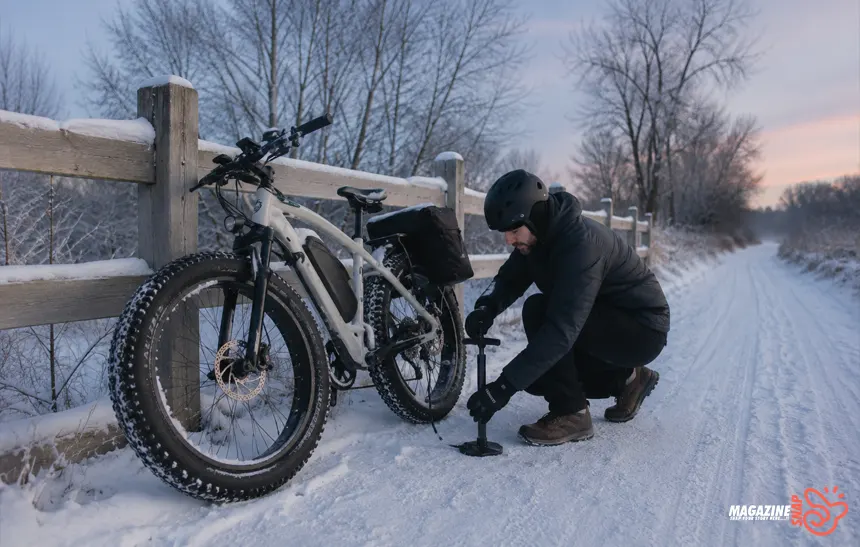
Fat tire pressure is counterintuitive. Most new riders over-inflate. Fat tires run between 5-15 PSI. The lower end (6-10 PSI) is what produces grip and surface float on loose terrain. Pump them to 30 PSI like a road bike and you’ve turned a $2,000 all-terrain machine into a slightly wobbly commuter. Start at 8-10 PSI for mixed terrain and adjust based on what you’re riding.
Cold weather and batteries have a difficult relationship. Below 32°F, lithium cells lose capacity and degrade faster with repeated deep cycles. If you’re in a place with real winters, bring the battery inside when the bike sits for more than a day or two. Over a 4-5 year battery lifespan, that habit can mean the difference between 600 healthy cycles and 400 compromised ones.
Payload limits include the rider, always. A 300 lb capacity means 250 lb rider plus 50 lbs of gear, not a 300 lb rider with room to spare. I’ve seen this misunderstood often enough that it’s worth stating plainly. The Velotric Nomad 2X’s 560 lb ceiling is the only spec on this list that gives heavier riders meaningful cargo room simultaneously.
What We’d Skip in 2026
A few bikes that came up repeatedly in my research but didn’t survive closer evaluation:
The Rad Power RadRover 6 Plus has a loyal user base and genuinely good customer service, both things worth acknowledging. But the bike hasn’t received a meaningful component update since 2022, still ships with a cadence sensor, and sits at ~$1,799. At that price in 2026, you’re paying for brand equity more than current technology.
The Cyrusher XF900 looks impressive on paper: full suspension, fat tires, 1,000W motor. Build quality reports from 2024-2025 buyers tell a different story. Motor power doesn’t compensate for inconsistent assembly, particularly in the suspension linkage and brake calibration, where the complaints concentrate.
Any sub-$600 fat tire e-bike from a brand with no US service infrastructure. The battery charger typically fails first. Nobody answers the support email. You’re six months in, $600 down, and looking at the same buying decision again.
Frequently Asked Questions
Are fat tire e-bikes harder to pedal without the motor?
Yes, noticeably. The wide tires add rolling resistance, and most fat e-bikes weigh 60-80 lbs. Without assist, expect the effort of riding a loaded city bike uphill everywhere. Most riders never turn the motor off voluntarily, which is fine, but worth knowing if you’re imagining hybrid use.
How many charge cycles does a fat tire e-bike battery last?
Quality lithium packs hold roughly 80% capacity after 500-800 full cycles, translating to 3-5 years of regular riding. Storing the battery between 40-80% charge rather than fully topped or fully drained extends that cycle life meaningfully. Leaving it plugged in overnight every night consistently is the fastest route to early degradation. (Most manufacturers won’t tell you that last part directly.)
Are fat tire e-bikes actually useful in snow, or just marketed that way?
They work well in packed snow and light powder. Drop tire pressure to 6-8 PSI for maximum surface contact. Deep wet snow and black ice will still cause problems, but a fat tire handles winter conditions that stop a standard e-bike cold. The Velotric Nomad 2X and Aventon Aventure 3 both carry enough peak torque to push through moderate drifts without spinning out.
What range should I actually plan around?
Take the advertised figure and multiply by 0.7 for realistic mixed conditions. On cold mornings, multiply again by 0.85. A “65-mile” bike delivers roughly 45-50 miles in fall conditions and closer to 38-40 miles in January. If your commute is 18 miles each way, you need a bike rated at 55 miles minimum, and 65+ miles if your winters are serious.
Do I need a license or registration for these bikes?
In the US, Class 1 and Class 2 e-bikes (up to 20 mph) don’t require a license or registration in most states. Class 3 (up to 28 mph) has path restrictions and some state-level regulations. If your bike unlocks to Class 3 via app, check local rules before using that mode; enforcement is inconsistent but fines are real.
Is the Aventon Aventure 3 worth $1,000 more than the Lectric XP 4?
For daily commuters on varied terrain, yes. The torque sensor, GPS tracking, and overall build quality justify the gap. For weekend riders who need folding storage and don’t want to spend $2,000, the Lectric is a genuinely good bike. The ride feel difference is real; how much it matters depends entirely on how you ride and how often.