

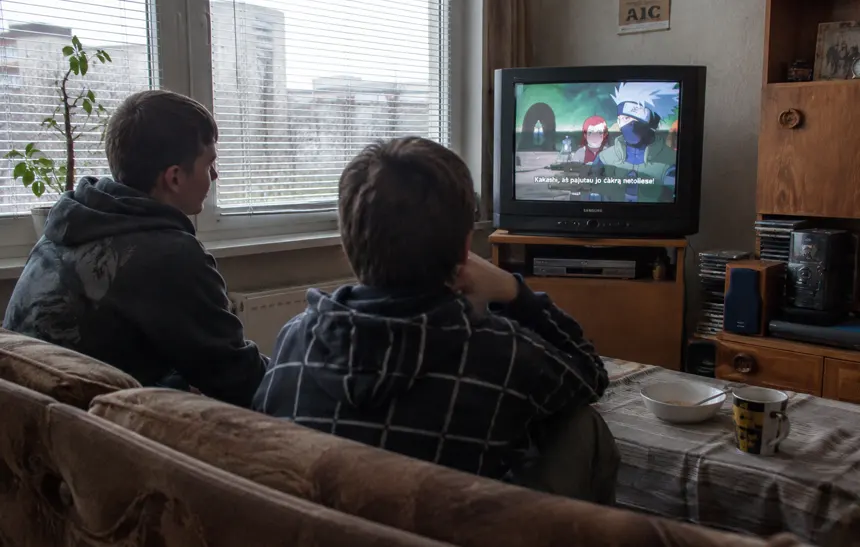
If you grew up in Lithuania around 2013 and had afternoon TV access, this title probably registers differently than it does in a search bar. “Narutas Viesulo Kronikos” wasn’t just a translated foreign show; it was the show, the one airing on BTV that kids were quoting by Thursday. For everyone else arriving here now, here’s the full picture.
- What the Name Actually Means
- What the Show Is
- How It Got to Lithuania
- Lithuanian TV in the Early 2010s: Why Broadcast Context Matters
- What the Lithuanian Dub Did Differently
- The Arcs That Define It
- The Characters Worth Understanding Before You Start
- Why It Still Holds Up
- Where to Watch It Now
- Frequently Asked Questions
What the Name Actually Means
Narutas Viesulo Kronikos is the Lithuanian localization title for Naruto: Shippuden, the sequel to the original Naruto anime. Word for word, “Viesulo” means storm or hurricane, and “Kronikos” means chronicles, so the whole phrase lands as something like “Chronicles of the Hurricane.” Compare that to what English speakers got: just “Shippuden,” a Japanese term most viewers had to Google. Lithuania’s version actually tells you what you’re in for.
Worth noting: the original Naruto series had already aired on LNK under the title Narutas, so an established local audience was waiting when the sequel arrived. The sequel title kept the branding familiar while hinting at something heavier. Smart localization, honestly.
What the Show Is
Naruto: Shippuden picks up two and a half years after the original ends, with Naruto returning from intense training under the sage Jiraiya. He’s stronger, yes, but the world has moved on without him. The Akatsuki, a group of S-rank rogue ninja, have been systematically capturing Jinchuriki (people who host powerful Tailed Beasts), and Naruto is one of them. His friend Gaara, already the Kazekage of the Sand Village, gets kidnapped within the first arc. That’s the tone from the opening episode.
What’s striking here is how the series handles consequence. Over its 500 episodes and roughly eight major arcs, named characters die and stay dead; villain backstories reframe entire earlier seasons. Most long-running shonen anime resets the emotional stakes between arcs. This one compounds them, so by the time the Fourth Shinobi World War arc rolls around, you’ve accumulated years of investment in the outcome.
I’ve noticed that filler episode counts are consistently underestimated by new viewers. Roughly 40% of Shippuden’s episodes don’t adapt manga source material at all, which means the canon-only run sits closer to 300 episodes than 500. The Narutopedia wiki keeps an updated episode list with filler clearly flagged, and that’s the most reliable reference for building a skip list.
How It Got to Lithuania
BTV started broadcasting Narutas Viesulo Kronikos in 2013, six years after the original Japanese premiere. For an international dub targeting a market of under three million people, that lag is fairly standard. The more interesting question is why Lithuania got a full native-language dub at all rather than subtitles or the English version.
Part of the answer is infrastructure. LNK, the channel that had broadcast Narutas starting in 2008, had already built Lithuanian dubbing pipelines for foreign content. Turkish soap operas, American animated series, acquired dramas, all of it went through local voice production rather than subtitle tracks. That meant the production capacity for a Lithuanian-language anime was already in place when BTV (a sister channel under the same MG Baltic Media parent company) picked up Shippuden.
The other part is timing. Netflix didn’t launch in Lithuania until 2016, three years after this show started airing. Legal streaming options for anime were essentially nonexistent before that. A weekday afternoon slot on BTV, a channel covering 80% of the country’s territory, put the show in front of kids who had no realistic alternative route to it. That’s a fundamentally different distribution environment than today’s.
Lithuania didn’t just receive one Naruto localization; it got both series, in sequence, in its own language. Few markets that small achieved that level of franchise continuity.
Lithuanian TV in the Early 2010s: Why Broadcast Context Matters
To appreciate what a BTV afternoon anime slot meant in 2013, you need some background on the Lithuanian television market. BTV was established in 1993 as a joint Lithuanian-US venture, making it one of the first private broadcasters in the country after independence. By the early 2010s it was competing in a market dominated by TV3, LNK, and the public broadcaster LRT Televizija, with roughly 80% national territorial coverage.
LNK launched in 1995 and built its audience largely through acquired international content dubbed into Lithuanian rather than subtitled. Turkish dramas, American cartoons, imported series, all localized. That dubbing tradition created the production infrastructure that made a Lithuanian-language anime broadcast viable in the first place. Both LNK and BTV operate under MG Baltic Media, so the handoff of the Naruto franchise between the two channels was, in all likelihood, an internal scheduling decision rather than a competitive acquisition.
Here’s what often gets overlooked in discussions about this era: Lithuanian households had no practical on-demand alternative. Scheduled broadcast television was how most people encountered serialized foreign content, full stop. A show on a channel reaching four-fifths of the country wasn’t niche programming; it was as mainstream as anything got.
What the Lithuanian Dub Did Differently
Most international Shippuden releases went one of two routes: the English dub or subtitled Japanese. Lithuania did neither. The localization team produced a full Lithuanian-language dub, with cast and dialogue specifically adapted for how the language functions in natural conversation rather than mapped onto Japanese delivery patterns.
Japanese voice acting relies on conventions that don’t translate cleanly into European languages: sustained high-pitched intensity, exaggerated reaction sounds, rapid staccato delivery during action scenes. Lithuanian is tonal and rhythmically distinct, with its own speech cadences. I’ve seen forum posts from Lithuanian fans pointing out that the dub avoided the trap of sounding like a stiff phonetic approximation; characters felt like they were actually speaking, not performing a translation. Whether that’s a credit to the direction or the casting is hard to say from the outside, but the effect was clearly real.
For a thirteen-year-old watching on a Wednesday afternoon in 2013, none of that was conscious analysis. It just didn’t feel foreign. That’s the thing about a well-executed localization: it disappears into the experience. The attachment Lithuanian fans still carry toward this dub, visible in forum threads years later, traces directly back to that quality.

The Arcs That Define It
Kazekage Rescue
Gaara, the Sand Village’s Kazekage, gets seized by the Akatsuki within the opening episodes. Naruto’s response to that crisis is the series’ first real measurement of how much his two-year training changed him. The answer is: considerably. It’s a focused arc that functions as both an action hook and a proof of concept for the darker series ahead.
Sasuke and Sai
Danzo dispatches a new operative named Sai to fill Sasuke’s vacant slot on Team 7. The friction this creates is less about Sai himself than about what his presence forces Team 7 to confront: that Sasuke left, that they couldn’t stop him, and that the village has quietly moved on. A character arc wearing the costume of a mission arc, essentially.
Hidan and Kakuzu
Two Akatsuki members with abilities that make them unusually difficult to permanently neutralize. What makes this arc worth singling out isn’t the villains; it’s that Shikamaru, rather than Naruto, drives the resolution. Handing tactical and emotional center stage to a supporting character is one of the series’ smarter structural choices, and it pays off in a way that’s hard to predict going in.
Pain’s Assault
Pain attacks Konoha directly. The village is destroyed. Named characters die. And the conversation Naruto has with Nagato afterward is the most direct statement the series ever makes about its central argument: that cycles of hatred require someone to absorb the cost of breaking them. If you’re evaluating the show and only have time for one arc, this is the right choice. Episodes 152–175 cover the core of it.
Fourth Shinobi World War
The final and longest sustained conflict, running across hundreds of episodes. Madara Uchiha steps forward as the true architect of events spanning multiple arcs. The pacing loosens considerably in the middle stretch, and some inserted filler episodes undercut the momentum in ways that are hard to defend. Even so, the resolution closes almost every major thread opened across both series. It’s overlong. It earns it anyway.
The Characters Worth Understanding Before You Start
Naruto Uzumaki carries a sealed demon inside him and spent his childhood being treated as a threat by the village that was supposed to protect him. His arc isn’t really about becoming Hokage; it’s about demonstrating, at scale, that compassion is a viable strategy. The show’s thesis lives in him.
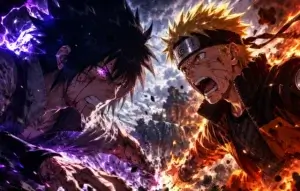
Sasuke Uchiha operates as the structural counter. Both he and Naruto want the same fundamental things (recognition, purpose, someone who won’t leave), but pursue them in opposite directions. Sasuke’s choices are consistently destructive, and the series doesn’t flinch from that. It treats his reasoning as coherent rather than arbitrary villainy, which is a harder and more interesting choice.
Itachi Uchiha is the one to know nothing about before watching. His arc contains a reveal that lands hard and retroactively reframes everything Sasuke has done to that point. Don’t look it up. (I’d say more but that would rather defeat the point.)
Sakura Haruno is probably the most underestimated character in the series. Early Shippuden Sakura is genuinely frustrating to watch; by the end she’s among the most capable medical ninja in the world. That development is slow and gets no dramatic announcement, which is actually more grounded than most of the power-scaling in the male cast.
Jiraiya, Naruto’s mentor, is the character most people cite when they say this show made them cry. His final arc is beautifully constructed. I’ll leave it there.

Why It Still Holds Up
The chakra system has proper internal logic, built from consistent categories: ninjutsu, genjutsu, taijutsu, and Kekkei Genkai blood-limit techniques. Each arc adds new elements without voiding what came before. The Sharingan alone generates dozens of tactically distinct confrontations across hundreds of episodes; that kind of structural depth is why the series sustains interest at a length that would sink most others.
Composer Yasuharu Takanashi’s work is genuinely underappreciated in conversations about why this show works. “Girei,” the track associated with Pain’s assault, does something unusual: it makes you feel the villain’s grief before you understand it. Studio Pierrot’s animation peaked during the major confrontations, particularly the Naruto vs. Pain sequence and the later Madara material, though budget inconsistency across 500 episodes is real and visible throughout the filler arcs.
The contrarian case against Shippuden is worth acknowledging: the series has a serious pacing problem in its final third, and “talk-no-jutsu” (Naruto resolving conflicts through emotional appeals rather than combat) became a running joke in the fan community for good reason. But here’s what I’d push back on, having watched it through: those moments work precisely because the series spent 300 episodes establishing that Naruto’s core conviction actually costs him something. The resolution feels earned because the groundwork is real.
Where to Watch It Now
A note on the Lithuanian dub specifically: it has no official home. The BTV broadcast was never pressed to DVD, never licensed to a streaming service, and won’t be found on Crunchyroll, Netflix, or any other legal platform. Lithuanian fan forums and private preservation archives are the only realistic starting points. Communities focused on regional dubs and lost-media recovery sometimes surface full arcs or run segments, but completeness is not guaranteed; it’s genuinely uncertain whether every episode was broadcast, fully dubbed, or recorded by anyone.
Crunchyroll hosts all 500 Shippuden episodes with Japanese audio plus subtitles and an English dub. Per the Wikipedia episode list, the series ran from February 15, 2007 through March 23, 2017, produced by Pierrot and TV Tokyo. That’s where most international viewers outside Lithuania will land.
New viewers: start with the original Naruto anime episodes 1–135 (episodes 136–219 are filler, skip freely), then move into Shippuden. Manga readers going canon-only can pick up Masashi Kishimoto’s chapters 245–700. After Shippuden, Boruto: Naruto Next Generations carries the story forward with Naruto’s son as the lead, and The Last: Naruto the Movie is worth watching first as a bridge between the two timelines.
Frequently Asked Questions
What does Narutas Viesulo Kronikos mean?
It’s the Lithuanian title for Naruto: Shippuden. “Viesulo” translates to storm or hurricane; “Kronikos” means chronicles. Together: “Chronicles of the Hurricane.”
When did it air in Lithuania?
BTV began broadcasting the show in 2013. The original Naruto series had run on LNK from 2008 under the title Narutas.
Is the Lithuanian version a complete dub?
That’s genuinely unclear. The broadcast covered a substantial portion of the series, but whether it extended through all 500 episodes isn’t confirmed publicly. Lithuanian fan communities hold the most accurate records of what was aired and preserved.
How many episodes are there, and how many can I skip?
500 total, with roughly 200 classified as filler. The canon run sits closer to 300. Episode skip guides are widely available on Reddit’s r/Naruto and on fan wikis.
Do I need to watch the original Naruto first?
Yes. The original series establishes relationships and backstories that Shippuden’s emotional payoff depends on. Jumping straight into the sequel is possible, but Jiraiya’s arc, Sasuke’s departure, Team 7’s full history: none of it lands the same without the groundwork.
Where can I find the Lithuanian dub?
There’s no official source. Lithuanian fan forums and regional preservation communities are the most practical starting points. It’s a partial lost-media situation at this point.
Does the story continue after Shippuden?
Yes, through Boruto: Naruto Next Generations, which follows Naruto’s son. The Last: Naruto the Movie is also worth watching first; it covers events between the Shippuden ending and the Boruto timeline, including Naruto and Hinata’s relationship.
What’s the best arc to sample if I’m not ready to commit?
Pain’s Assault. Episodes 152–175 cover the main sequence. It’s self-contained enough to follow cold, and it shows the series at its ceiling.