
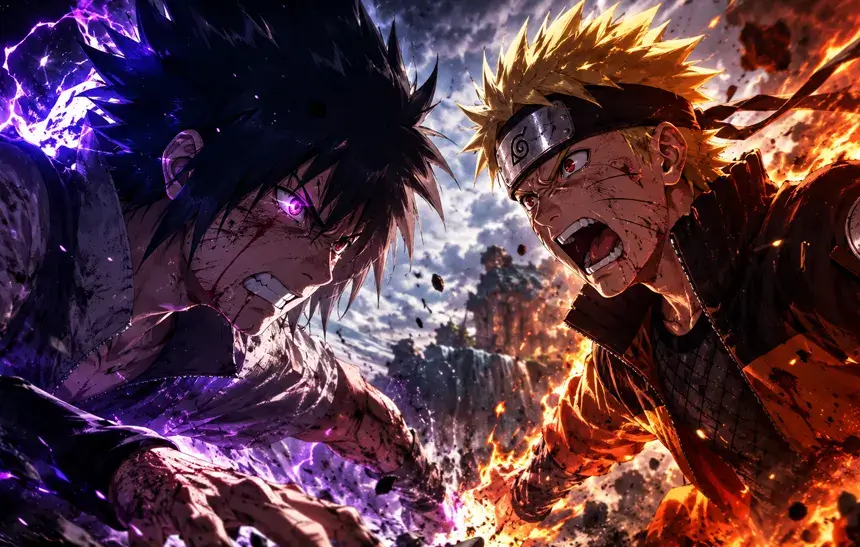
The character has been losing. Someone they love just got hurt – badly. The music drops. The art style cracks open. And then the person who was getting beaten senseless becomes the most terrifying thing in the room.
These scenes aren’t just cool fights. They’re the emotional detonations that define entire series. Fans rewatch them years later, not for the spectacle, but because something about watching a person hit their absolute limit hits differently than any normal action sequence.
Here’s what makes the best ones work, and why a handful of them have genuinely outlasted the shows they came from.
What Actually Makes a Rage Scene Land
Not every power-up qualifies. The ones that stick have 3 things: a clear emotional trigger the audience has been watching build for episodes (sometimes seasons), a transformation that feels like consequence rather than reward, and a cost – something the character loses or breaks in the process of winning.
Naruto’s Nine-Tails surges stopped landing as hard after the third or fourth time because the cost disappeared. The first time, in the fight with Haku, there was genuine danger and confusion. By the Pain arc, it had recovered enough emotional weight because Hinata’s fall gave it back a real trigger.
The formula isn’t the point. The earned weight is.
Best Anime Rage Moments, Ranked by Impact
1. Guts vs. the Apostles – Berserk (1997)
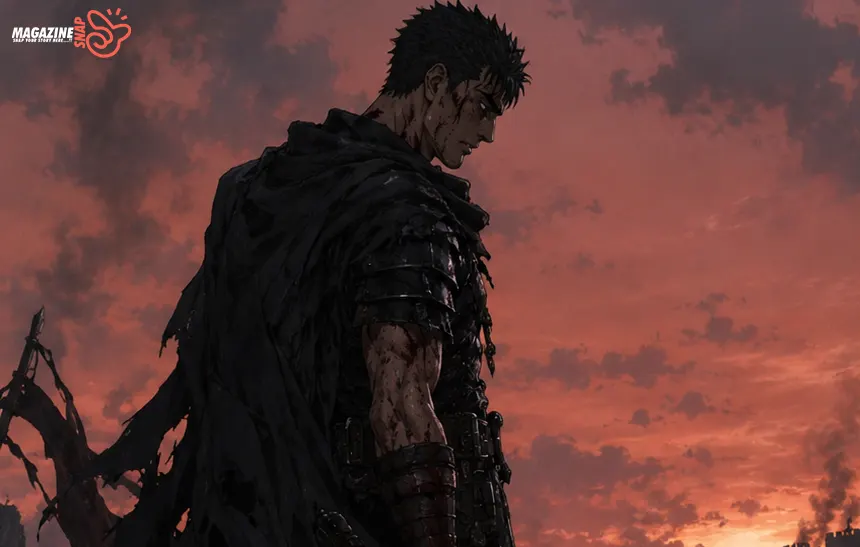
The 1997 Berserk anime adaptation spent 24 episodes turning Guts into someone you understood completely – his loyalty to Griffith, the slow erosion of his autonomy, the way the Band of the Hawk became the first place he’d ever belonged. Kentaro Miura built that foundation across years of manga before it paid off.
When the Eclipse hits and Guts fights through apostles with a severed arm and a broken sword, the scene doesn’t feel powerful. It feels desperate. The killing has no triumphant quality to it. He’s not winning; he’s refusing to stop moving because stopping would mean accepting what’s happening.
That distinction is why this scene is still talked about 27 years after the anime aired. The 2016 remake had technically better animation in places, but it never recreated that feeling because it rushed the emotional architecture underneath.
2. Tanjiro’s Hinokami Kagura – Demon Slayer, Episode 19
Episode 19 of Demon Slayer was the most-discussed single episode of 2019 on Twitter and Crunchyroll, and ufotable’s animation work has been analyzed in detail elsewhere. The fire effects are extraordinary. The color shift is precise.
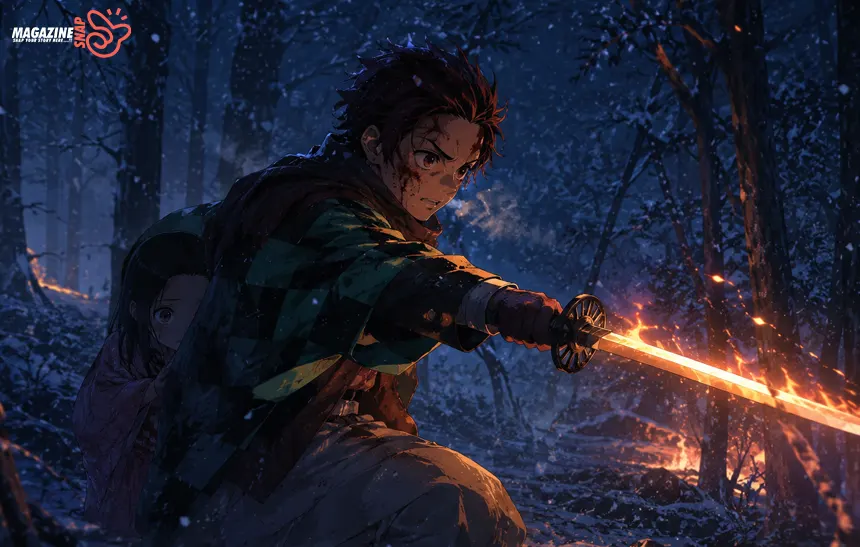
What most breakdowns miss: Tanjiro’s face during this sequence.
Most shonen protagonists shift into a kind of cold focus when they power up – “serious mode,” where the emotion actually recedes. Tanjiro doesn’t do that. He looks furious. Visibly, genuinely furious. That emotional honesty is the thing that pushed episode 19 from “impressive fight” to a cultural moment that people who’d never watched anime were sharing on social media.
The rage also has a specific texture. Tanjiro isn’t angry at Rui in the abstract. He’s angry because Nezuko is suffering, and Nezuko suffering is the one thing he physically cannot accept. The scene works because ufotable trusted that specificity instead of genericizing it into “protagonist gets serious.”
3. Vasto Lorde Ichigo – Bleach, Episode 271
Ulquiorra kills Ichigo on-screen. Not “nearly kills.” Kills – tears off his arm, impales him through the chest, with Orihime watching.
What comes back is something Ichigo has no control over. The Vasto Lorde form is terrifying specifically because it’s not a power fantasy; it’s a loss of self that happens to be catastrophically effective in a fight. Ulquiorra – who spent the entire arc claiming emotions were meaningless – visibly flinches. That one character beat communicates more than any exposition could.
Tite Kubo has said this arc was about the danger of power that costs you your identity. Whether you find that thematically satisfying or not (the Arrancar arc has its critics), the scene delivers on that idea completely.
4. Eren’s First Transformation – Attack on Titan, Episode 5
Eren watches his mother die and can’t do anything. He’s a child. The scene makes sure you feel that helplessness fully.
The payoff comes later, when Armin and Mikasa are seconds from being killed. Eren’s first transformation has no speech, no dramatic monologue, no musical swell building to a release. It just happens. Wit Studio let the animation carry the entire emotional load, and the decision was exactly right.
The scene also does something structurally clever that most analysis skips over: it makes you slightly afraid of Eren before it makes you root for him. That unease is the seed of everything that happens in the final arc, planted in episode 5. That’s writing.
5. Kaneki’s Transformation – Tokyo Ghoul, Episode 12
[Image suggestion: White-haired Kaneki character design reference – official art or licensed image only]
The torture sequence in Tokyo Ghoul’s first anime run is designed to be genuinely uncomfortable. Yamori breaking Kaneki’s fingers repeatedly – counting down, resetting, starting again – is paced slowly on purpose. The audience is supposed to want it to stop.
When Kaneki snaps, the sequence goes internal – a confrontation with Rize in his subconscious, centipede imagery, the hair going white. It’s chaotic in a way that matches his mental state. The white-haired Kaneki design became one of the most cosplayed looks of 2014-2015 specifically because of how that transformation was framed: not as a power gain, but as a person dismantling their own self-concept and rebuilding around the one thing left.
The later seasons struggled, but this scene holds up.

6. Yusuke’s Rampage – Yu Yu Hakusho (Dark Tournament Arc)
This one aired in 1993. It still belongs on any serious list.
After Genkai’s apparent death during the Dark Tournament, Yusuke doesn’t become sharper or more focused. He becomes sloppy. Reckless. He makes tactical mistakes he wouldn’t make calm. Yoshihiro Togashi made a deliberate choice to show rage as a liability as much as a resource – and that choice made the emotional state feel real rather than convenient.
Togashi applied the same philosophy years later in Hunter x Hunter. Yusuke was clearly the prototype.
7. Gon’s Transformation – Hunter x Hunter, Chapter 321 (Anime Episode 131)
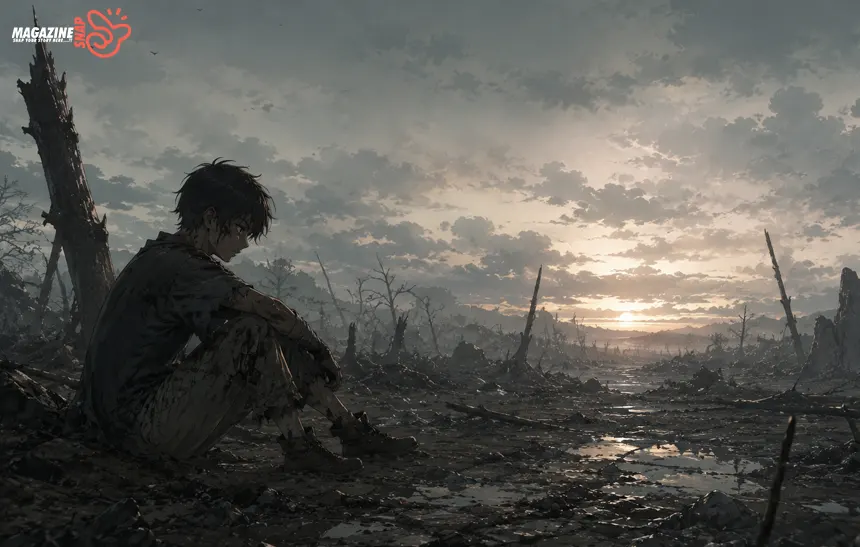
This one sits apart from everything else on this list.
The setup: Gon spent weeks trying to rescue Kite, certain he was alive. When Gon finally finds out Kite was already dead the whole time – that all of it was pointless – something in him breaks in a specific and irreversible way.
He makes a deal with his own life. Aging his body decades in seconds to gain enough power to destroy Neferpitou. He wins. And then the camera (metaphorically) stays with what’s left afterward: an empty shell of a person, barely conscious, staring at the remains of the fight with no relief and no sense of resolution. Just a void.
Togashi has described this as the darkest he ever took the character. You can feel that. Gon’s transformation is the one anime rage scene that refuses to let you feel good about what happened, and that refusal is exactly what makes it stay with you.
The Psychological Architecture Behind These Scenes
Most writing about anime rage moments focuses on the visual transformation: the hair change, the aura, the animation budget going up. That’s worth discussing, but it’s the surface layer.
The scenes above all share a deeper structure. Every one of them involves a character whose identity is built around protecting something specific – a person, an ideal, a sense of self – and the rage happens at the exact moment that thing gets destroyed anyway.
Guts fights for the people in the Band of the Hawk. The Eclipse takes them. Gon fights to bring Kite back. Kite was already gone. Kaneki rebuilds himself around not being a monster. Yamori forces him to become one.
The rage is the moment the character’s entire reason for fighting gets negated. That’s why these scenes feel bigger than a fight. You’re watching someone’s sense of purpose collapse, and the violence is just what happens in the vacuum.
What the Cheap Version Gets Wrong
The cheap version of an anime rage moment is a power-up with dramatic music. Character gets angry, becomes stronger, wins cleanly. Sometimes that’s all a scene needs.
The moments fans still talk about decades later are the ones where winning costs something you can feel. Gon loses years of his life and nearly his will to continue. Kaneki loses his identity. Ichigo loses control entirely. Tanjiro collapses immediately after his victory, and Nezuko nearly dies in the process.
The transformation is a warning sign in these scenes, not a reward. That’s the difference.
Rage Moments and Their Aftermath
| Anime | Character | Trigger | What the Character Lost |
|---|---|---|---|
| Berserk | Guts | Eclipse – the Hawks massacred | Everyone he’d built his life around |
| Attack on Titan | Eren | Mother killed in front of him | His sense of helplessness (and later, his humanity) |
| Hunter x Hunter | Gon | Kite was already dead | His purpose, nearly his life |
| Tokyo Ghoul | Kaneki | Systematic torture by Yamori | His identity as someone who wasn’t a monster |
| Demon Slayer | Tanjiro | Nezuko brutalized by Rui | His composure; he collapses right after |
| Bleach | Ichigo | Orihime’s helplessness, his own death | Control over himself |
Honorable Mentions Worth Your Time
Shirou vs. Archer – Fate/Stay Night: Unlimited Blade Works. Not a rage moment in the traditional sense, but the emotional intensity of fighting a future version of yourself you despise – someone who represents what you might become – hits the same psychological register. The Ufotable adaptation (2014-2015) handles this fight beautifully.
Naruto vs. Pain. The Nine-Tails surge after Hinata falls is one of the better-executed examples of rage-as-grief in shonen. It works because the show spent years establishing that Naruto’s emotional armor is almost impenetrable – and Hinata falling is the specific thing that gets through it.
Hyakkimaru’s breakdown – Dororo (2019). Quiet, methodical, slow-burning rage. A completely different tempo from everything else on this list. The 2019 MAPPA adaptation gave this arc more weight than the original manga, and the payoff earns it.
Gyomei Himejima’s backstory reveal – Demon Slayer: Swordsmith Village Arc. Less commonly cited than Tanjiro’s episode 19 moment, but Gyomei’s history – the children who turned on him, the night he spent fighting alone until sunrise – is one of the more devastating backstory reveals in recent anime.
FAQ: Anime Rage Moments
What’s the most iconic anime rage moment?
Most fans and critics point to either Gon’s transformation in Hunter x Hunter or Guts’ rampage during the Eclipse in Berserk. Both involve losing something permanent, and neither scene gives the audience a clean emotional release. Gon’s has a slight edge in terms of psychological complexity; Guts’ has a slight edge in raw visceral impact. If you can only watch one, start with Hunter x Hunter’s episode 131 – and watch the entire Chimera Ant arc to get there properly.
What separates a rage moment from a standard power-up?
A power-up is mechanical. A rage moment is psychological. The character doesn’t just become stronger; they reach a breaking point where something fundamental about how they see themselves or their situation changes – and the power is a side effect of that break. The best ones involve a cost you can feel watching it.
Which anime has the best density of rage moments?
Berserk and Bleach have the highest volume. But volume doesn’t equal impact. Hunter x Hunter has fewer rage sequences than almost any other major shonen, and arguably the most devastating single example in the genre’s history. Quality over quantity applies here.
Is this mostly a shonen genre thing?
Structurally, yes. Shonen builds protagonists around emotional bonds that become targets – hurt who they love, and you get the reaction. But seinen works handle it with more psychological weight and less catharsis. Berserk, Vinland Saga, and Dororo all do this. The rage in those series tends to leave a worse aftertaste, which is often the point.
What should I watch if I want to study how these scenes are constructed?
Four series give you a complete picture of how the genre handles emotional breaking points: Attack on Titan (especially the first three seasons), Demon Slayer (Season 1, Episode 19), Hunter x Hunter (Chimera Ant arc, episodes 116-135 approximately), and the 1997 Berserk anime. Watch them in that order. Each one takes a slightly different approach to the same underlying structure.