
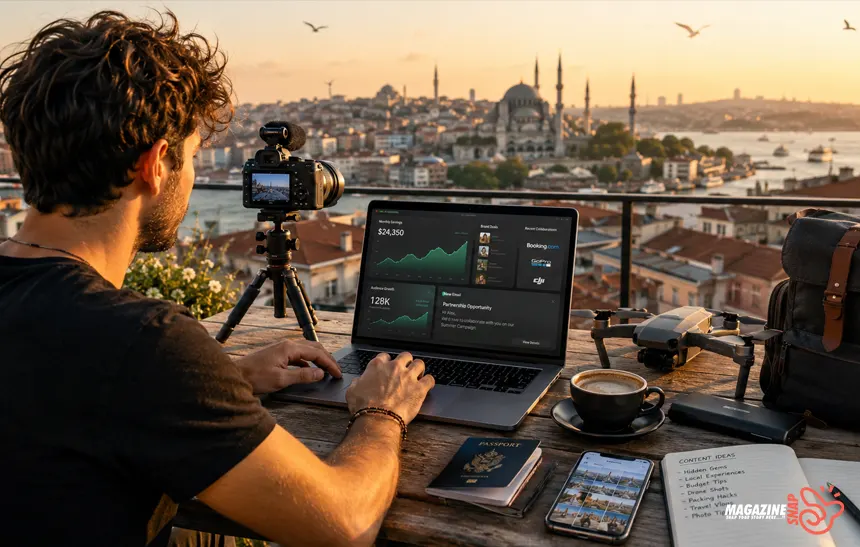
Most people start making travel content because they love to travel. Then they post a few photos, get a handful of likes, and wonder why nothing’s happening. The hard truth: loving to travel and knowing how to create travel content that builds an audience are two completely different skills.
The good news? You can learn the second one. This guide covers everything you need to know, from picking your angle and filming your first reel to landing brand deals and building a real income. No fluff, no vague advice. Just what actually works.
- What Travel Content Creation Actually Looks Like Now
- Choosing Your Travel Niche
- Top Content Formats That Actually Perform
- Creating Travel Content With Gear You Already Have
- The Travel Creator's Guide to Getting Paid
- Working With Brands and Tourism Boards
- Building Your Personal Brand as a Travel Creator
- Budget and Cost Breakdown for New Creators
- Expert Tips for Becoming a Travel Content Creator
- FAQs
What Travel Content Creation Actually Looks Like Now
The travel industry has changed. Gone are the days when you needed a massive following to get opportunities. Brands, tourism boards, and hotels are actively looking for creators at every level, including smaller creators with tight, loyal audiences.
A travel content creator today is part storyteller, part strategist, part editor. You’re producing short-form video for TikTok one day, writing a caption that drives link clicks the next, then shooting a carousel for Instagram posts the day after. The job is genuinely multi-format.
And the ceiling is high. Full-time travel creators regularly earn through a mix of brand deals, affiliate links, digital products, and passive income from SEO-driven blogs. Getting paid to travel isn’t a fantasy. But it does require treating this like a real job.
Choosing Your Travel Niche
This is where most new travel content creators get stuck. They want to create video content around everything: budget travel, luxury travel, solo trips, family road trips. That scatter-shot approach almost never works.
Pick one clear angle. Budget backpacker. Family adventure. Solo female travel. Slow travel in Southeast Asia. The more specific you go, the faster you build a loyal audience because people know exactly what they’re signing up for.
Your travel niche also determines which brands and tourism boards want to work with you. A creator focused on budget travel attracts a different type of sponsor than someone doing luxury travel content. Neither is wrong. Just be clear on who you’re talking to, because your target audience shapes everything.
Top Content Formats That Actually Perform
Short-Form Video
Short-form video is the fastest path to growth right now. A well-cut reel showing your morning in Lisbon or a 60-second TikTok walking through a local market can reach hundreds of thousands of people who’ve never heard of you.
The hack most creators miss: your first 2 seconds decide everything. No slow pans, no logos, no “hey guys.” Cut straight to the most visually interesting moment you have.
The Itinerary Post
Itinerary content performs consistently across every platform. A “72 hours in Tbilisi” itinerary or a “2-week Japan itinerary on a budget” gets saved, shared, and searched for years. These are your long-tail SEO assets. Write them well and they keep driving traffic long after you’ve moved on.
Instagram posts built around a clean, scannable itinerary tend to get high save rates too, which the algorithm rewards.
Carousel and Photo Essays
A carousel on Instagram or LinkedIn (yes, LinkedIn) that breaks down a travel experience step by step gets serious engagement. The format forces you to be structured, and people swipe through the whole thing if your first slide is good enough.

Creating Travel Content With Gear You Already Have
You don’t need a $3,000 camera to start creating travel content. Most successful travel creators launched with a phone. The iPhone 15 Pro shoots 4K ProRes video. That’s more than enough.
What matters more than gear: light and audio. Film near windows. Use a cheap lav mic for voiceovers. Keep your shots steady (a $30 mini tripod changes everything). High-quality content is about the basics done consistently, not expensive equipment.
The Travel Creator’s Guide to Getting Paid
Getting paid as a travel creator comes through a few main channels, and most successful creators use all of them.
Brand deals are the most visible income source. A brand or tourism board pays you to feature their destination, product, or service. These start small, often $200 to $500 for smaller creators, but scale fast once you have proof of engagement. Your analytics matter more than your follower count here. Brands want to see saves, link clicks, and genuine comments.
Affiliate links are the underrated workhorse. Drop your booking links, gear recommendations, and tour affiliate links into your bio, blog posts, and video descriptions. Every time someone books a hotel or buys a piece of gear through your link, you earn a cut. It’s a real passive income stream once you have content volume.
UGC (user-generated content) is worth knowing about if you’re newer. Brands pay creators to shoot content for the brand’s own channels, not your audience. You don’t need a following for UGC, just good video and photo skills. Many new travel content creators use this to earn money while still building their audience.
Digital products round out the income. Preset packs, travel guides as PDFs, photography workshops, or hosting group trips can each become a solid new income stream.
Working With Brands and Tourism Boards
Landing your first pitch to a brand or tourism board feels intimidating. Here’s what actually helps: a clear media kit, 3 to 5 strong content examples, and a specific collaboration idea (not just “I’d love to work together”).
Brands and tourism boards get dozens of generic pitches weekly. Come in with a concept: “I’m planning a 5-day solo trip through Oman in March. Here’s the content plan I have in mind, here’s my audience breakdown, and here’s how I see your brand fitting in naturally.” That specificity is what makes you stand out.
Working with travel brands gets easier once you have a few case studies showing results. Document your wins. Screenshot the analytics post-campaign. Build a track record, and you’ll attract these opportunities without cold pitching.
Building Your Personal Brand as a Travel Creator
Your personal brand is your most durable asset. It’s what makes someone choose your content over the next travel creator covering the same destination.
Start building it early. Pick a consistent visual style. Develop a recognizable tone in your captions. Be a specific kind of person online. Not a character, just a consistent version of you. The creators who build real, lasting audiences are specific enough that their followers feel like they know them.
SEO matters here too, especially for anyone running a travel blog alongside social. Use destination-specific language, practical detail, and real experiences. Google‘s ranking systems favor content that actually helps people plan trips, not promotional descriptions that could’ve been written without ever going anywhere.

Budget and Cost Breakdown for New Creators
Starting your journey as a travel content creator doesn’t have to be expensive.
| Item | Estimated Cost |
|---|---|
| Smartphone tripod + grip | $20 to $50 |
| Lavalier microphone | $25 to $80 |
| Basic editing app (CapCut, DaVinci) | Free |
| Website/blog hosting | $5 to $15/month |
| Canva Pro (for graphics) | $15/month |
Your biggest investment is time, especially in the first 6 months before you start getting paid. Budget travel principles apply here too: start small, be resourceful, and scale as income comes in.
Expert Tips for Becoming a Travel Content Creator
Focus on one platform first. Trying to be everywhere at once spreads you thin. Master TikTok or Instagram Reels, then expand.
Create content around what people are actively searching for. Use free tools like Google Trends or AnswerThePublic to find content ideas with real demand. “Best things to do in Chiang Mai in one day” will always outperform “my thoughts on Chiang Mai.”
Batch your filming. When you’re in a destination, film multiple pieces of content in one shoot. Plan your shots before you arrive.
Engage your comments genuinely. The creators who build a loyal community treat comments like conversations, not metrics. People keep coming back when they feel seen.
Know your numbers. Review your analytics monthly. Know which content formats perform best, which destinations get the most saves, and what drives actual link clicks. Data shapes better decisions about what to make next.
The creators who turn their passion for travel into sustainable income all say the same thing: they didn’t wait until they were ready. They started creating travel content before they felt qualified, refined as they went, and kept showing up consistently.
FAQs
How do I become a travel content creator with no following?
Start posting consistently on one platform and focus on content quality over follower count. Many brands now work with creators who have micro-audiences (1,000 to 10,000 followers) because the engagement rates are often better. Build the portfolio first; the following comes with it.
How much money can a travel content creator make?
It ranges wildly. New creators might earn $500 to $2,000 per month from a mix of UGC and affiliate links. Established creators with a real audience can earn $5,000 to $50,000+ monthly through brand deals, courses, and affiliate income. Getting paid to travel full-time is realistic by year 2 to 3 for consistent creators.
Do I need expensive camera equipment to start?
No. A modern smartphone shoots professional-grade video. What separates average content from good content is lighting, composition, and editing, not camera price. Upgrade gear only once you’re generating income from your content.
What’s the best platform for a new travel creator?
TikTok and Instagram Reels have the highest organic reach for new creators right now. If you prefer writing, a travel blog with solid SEO can build slow but steady traffic that pays well through affiliate links. Many successful creators use both.
How do I pitch a tourism board?
Build a simple media kit showing your niche, audience demographics, and past content examples. Then send a specific pitch with a content concept, timeline, and deliverables. Keep it to one page. Mention real numbers from your analytics, even if they’re modest. Tourism boards care about genuine engagement with a relevant audience.
Can smaller creators get free trips from brands?
Yes. Brands and tourism boards increasingly run campaigns with micro-influencers and smaller creators because the cost is lower and the content often feels more authentic. Free trips typically come before paid deals, so treat them as a way to build your portfolio and relationships in the travel industry.
How long does it take to see results from travel content?
Most creators see meaningful traction between 6 and 12 months of consistent posting. Success as a travel content creator rarely comes overnight. The creators who make it tend to commit to at least a year before evaluating whether something is working.