
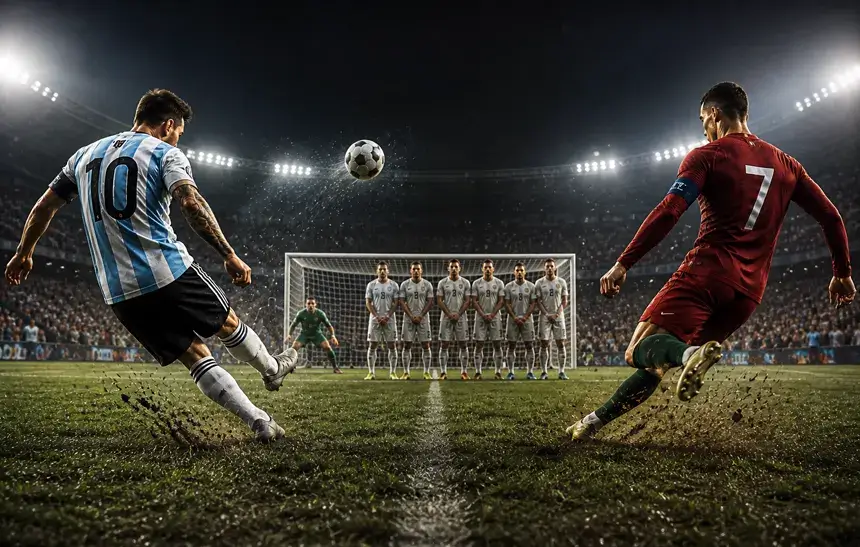
August 27, 2024. Al Nassr 4-1 Al Feiha. Ronaldo curled one into the top left corner in the first half, the Saudi Pro League crowd reacted, and the tally clicked to 63.
That was 21 months ago. He hasn’t scored a direct free kick since.
Meanwhile, Messi has added 8 more. He scored one against Orlando City in early 2026, another against NYCFC a month later. Before that, there was a goal against FC Porto at the Club World Cup in June 2025, Miami trailing at half-time, Messi earning the foul himself on the edge of the D and curling it into the top right corner past Claudio Ramos. The Porto goalkeeper knew exactly where it was going. He still couldn’t stop it.
This divergence, 71 to 63, tells you something specific about how technique ages. It’s one of the more revealing stats in the rivalry right now.
Ronaldo’s Knuckleball Era Is Over
The peak was real. Between 2009 and 2011, Ronaldo scored 21 direct free kicks in 3 seasons. Messi scored 3 in the same period. Ronaldo had the most feared set piece in football: the knuckleball, minimal backspin, raw pace, unpredictable wobble through the air. Goalkeepers genuinely had no idea which direction it would break.
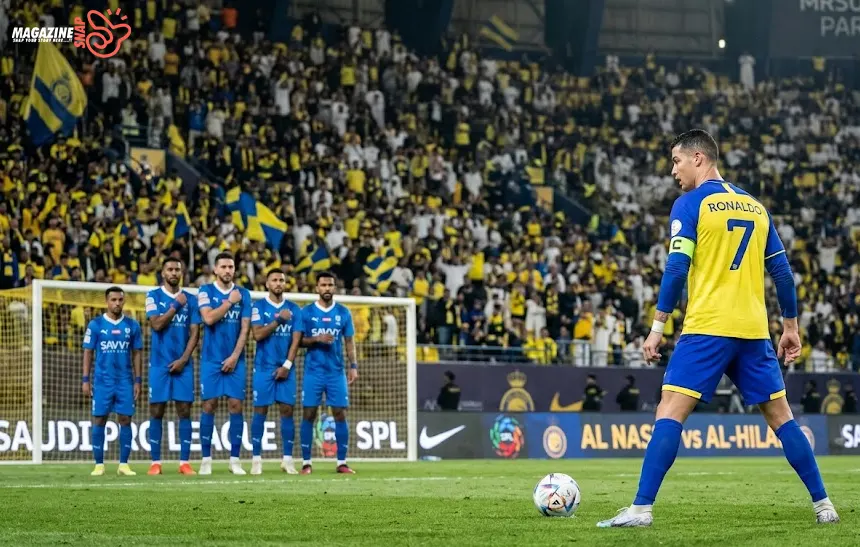
After 2014, that weapon went quiet. He scored 9 free kicks in his final 4 seasons at Real Madrid. One in 3 years at Juventus. By the time Euro 2024 came around, Portugal’s manager Roberto Martinez was publicly fielding questions about whether Ronaldo should still be taking them at all.
Biomechanics researchers who’ve analyzed the knuckleball technique at a frame-by-frame level point to a narrow margin for error at its core. To generate unpredictable movement, you need near-perfect contact on a very specific spot of the ball, with a very specific follow-through, at pace. The margin doesn’t widen with age. It closes.
What’s interesting is that Ronaldo’s run-up and strike mechanics don’t look dramatically different to the naked eye. The subtle shift is probably in the milliseconds of contact, the micro-precision required to generate spin-free flight. Those details are almost impossible to see on camera, but the ball flight doesn’t lie.
There’s also a stubbornness factor here worth naming. Ronaldo scores far more often when he curls the ball. A handful of his recent successful free kicks, including one against Torino while at Juventus, were curled, not knuckled. He has an alternative. He rarely uses it. The conversion rate has suffered for it.
Why Messi’s Technique Ages Better
Messi’s free-kick method hasn’t changed materially in 20 years. Left foot, curved approach from the right, ball struck on the outside of the instep and bent away from the goalkeeper. Sometimes it finds the far corner, sometimes it dips low and hard at the near post. He went around the wall for the Orlando City goal, bounced it under the goalkeeper’s hands. Clean, simple, repeatable.
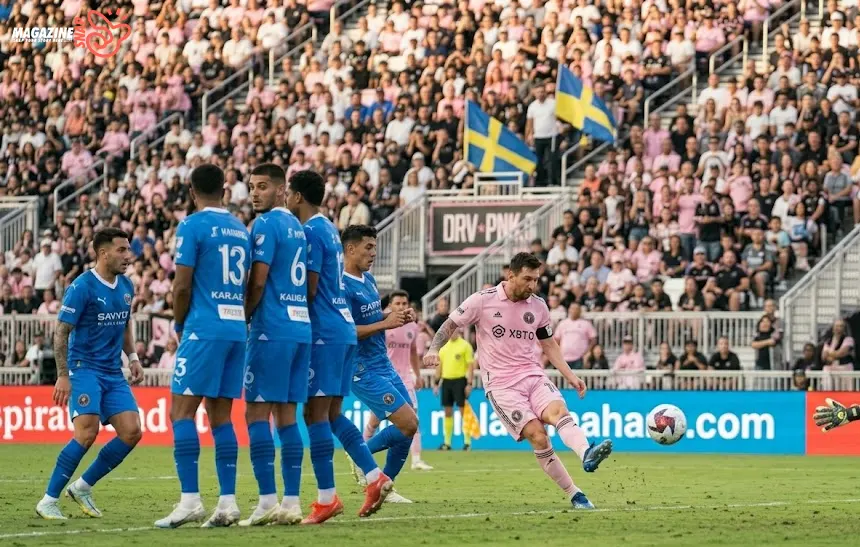
The reason it still works at 38 comes down to what the technique demands from your body. A curling free kick is built on spin, and generating spin is about precision of contact and feel in the foot. That doesn’t depend on your explosive pace or the peak strength in your standing leg. It’s a skill that stays with you.
A knuckleball is different. The physics require you to deliver pace without spin, and to hit the exact same spot on the ball every time to produce the effect. That’s a much narrower target, physically and technically, and the penalty for a slight miss is that the ball just flies straight. Predictably, catchably.
Messi’s technique was never as theatrical. It never produced the 35-yard thunderball crowd moment in the way Ronaldo’s best free kicks did. But it’s aged gracefully because it was built on a foundation that doesn’t erode.
The Numbers
| Category | Messi (May 2026) | Ronaldo (May 2026) |
|---|---|---|
| Career direct free-kick goals | ~71 | ~63 |
| Free kicks per goal | Every ~16.7 games | Every ~19.9 games |
| Last free-kick goal | March 2026 (vs NYCFC) | August 2024 (vs Al Feiha) |
| Free kicks scored, 2025 | 3 | 0 |
| Free kicks scored, 2026 | 2+ | 0 |
Sources: messivsronaldo.app, Transfermarkt, official league statistics. Figures cover official competitive matches only.

Messi has led Ronaldo on conversion rate since roughly 2017, when the gap started widening. From 2017 to 2019 alone, Messi scored 23 direct free kicks to Ronaldo’s 5. The current gap of around 8 goals reflects nearly a decade of diverging trajectories, not just recent form.
Who Is Marcelino Carioca (And Why Does It Matter)
Most football fans under 35 have never heard this name. Marcelino Carioca is a Brazilian midfielder who retired in 2009, spent most of his career at Santos and Fluminense, and holds the all-time record for direct free-kick goals in official competition with 78.
Five of the top 10 all-time free-kick scorers are Brazilian, a list that includes Zico, Juninho Pernambucano, Bebeto, and Roberto Carlos. That era produced a specific school of dead-ball technique in South American football, and Carioca was its most prolific practitioner.
Messi, at 71, needs 7 more to tie the record. He’s been scoring between 3 and 5 per season in recent years (5 in 2023, 1 in 2024, 3 in 2025, 2 already in early 2026). At that pace, he’s on course to reach 78 sometime in the 2026-2027 MLS season, assuming he keeps playing and stays healthy.
Whether Ronaldo can get from 63 to 78 is a steeper question. He’s 41 in 2026, hasn’t scored a direct free kick in 21 months, and plays for a club that, compared to Real Madrid or even Juventus, sits in a league where the quality and frequency of attackable free-kick positions is lower. Saudi Pro League opponents defend deeper, with more bodies in the wall, and the stadium conditions make consistent ball flight harder to control.
The mathematics makes it theoretically possible. The recent evidence suggests the gap will keep growing.
What 2025’s Zero Means
The most telling number in this whole comparison isn’t the career tally. It’s 2025: Ronaldo finished the entire calendar year without a single direct free-kick goal. That’s the first time that’s happened in 23 consecutive seasons.
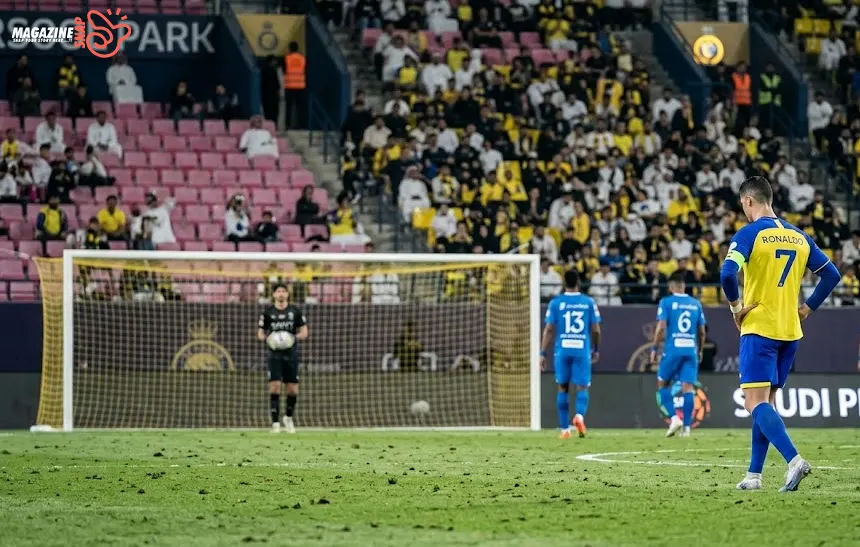
For context, Ronaldo scored his first direct free kick in official competition in 2002 at Sporting CP. He’s been scoring them every year for over two decades, through 6 clubs, 3 leagues, and 7 Ballon d’Or campaigns. The 2025 shutout broke a streak that ran alongside his entire professional career.
He’s still dangerous in the box for Al Nassr, still finishing at an impressive rate for a 41-year-old. The overall decline narrative doesn’t hold up. But the knuckleball, that specific shot, the one that defined a whole era of set-piece football, has gone.
FAQ
How many free kick goals does Messi have in 2026?
As of May 2026, Messi has scored approximately 71 career direct free-kick goals in official competition. He’s scored at least 2 in the 2026 calendar year, including goals against Orlando City and NYCFC in MLS.
When did Ronaldo last score a direct free kick?
August 27, 2024, in Al Nassr’s 4-1 win over Al Feiha in the Saudi Pro League. That was his 63rd career direct free-kick goal, and it broke a run that began in 2002. He finished all of 2025 without scoring one.
Who has more career free-kick goals, Messi or Ronaldo?
Messi leads with approximately 71 to Ronaldo’s 63 as of May 2026. Ronaldo held the lead until around 2021. Messi’s conversion rate has been better since at least 2017.
Who holds the all-time record for direct free-kick goals?
Brazilian midfielder Marcelino Carioca holds the record with 78. He retired in 2009 and is largely unknown to fans who grew up watching this era. Messi is 7 away from tying it.
Why does Messi still score free kicks but Ronaldo doesn’t?
The difference is technique. Messi curls the ball with spin, which ages well because it relies on precision in the foot rather than explosive force. Ronaldo’s knuckleball requires near-perfect contact to generate unpredictable movement in the air. That margin for error narrows with age, and the ball started flying straight and predictable rather than wobbling. He retained the pace; the movement disappeared.
Can Ronaldo still break the all-time free-kick record?
Theoretically, yes. He’d need 15 more goals to break Carioca’s record of 78. Given he hasn’t scored one since August 2024, the realistic outlook is that Messi reaches 78 first, probably in 2026 or 2027.